
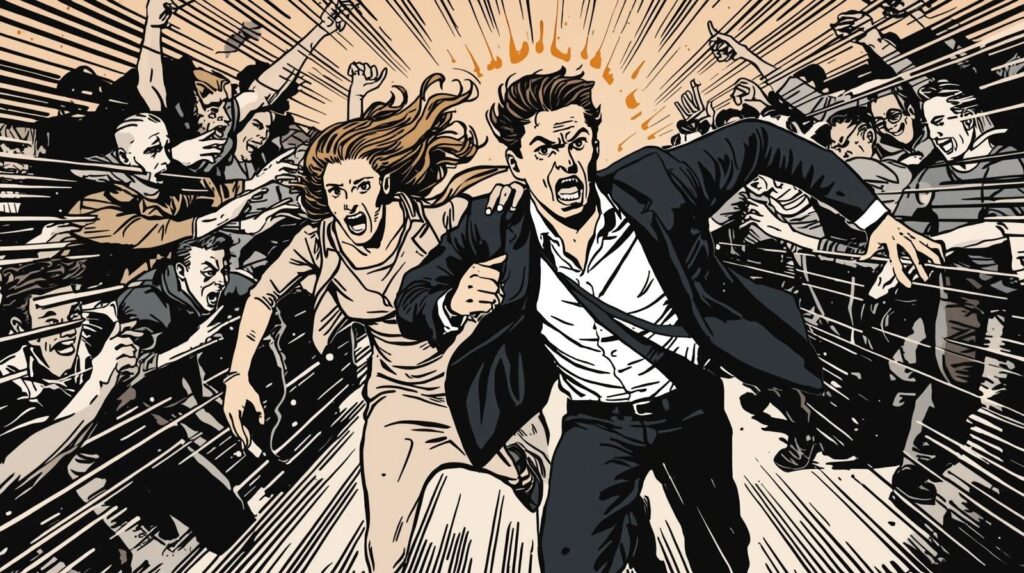
Understanding the killing in the name of honour is not simple because the idea of honour itself is complex and deeply rooted. The term of honour is not new, wherever groups of people have existed, they have developed a social structure shaped by shared behaviours, common rules, certain habits, and circumstances.
For any code of conduct to gain acceptance among the masses, it must offer certain rewards. These rewards appear in the form of pride, glory, respect, acceptance, and social ranking. Together, they create what we recognise as honour. It exists across the world in many different expressions, and within each group, it functions as a mechanism for regulating behaviour.
The Roots and Drivers of Honour Culture
- Psychology behind honour culture
At the core of honour-based psychology lie several intertwined elements.
The perception of threat from the surroundings or the society makes individuals feel that even small challenges to their dignity or status, must be confronted to preserve respect.
Giving priority to group identity means a person’s behaviour reflects directly on their family, tribe, or community, this creates pressure to uphold mutual honour.
Honour culture grows on the motivators like shame and emotional vulnerability, the fear of embarrassment in society or social humiliation from them can drive extreme reactions.
- Biology behind honour culture
Honor culture is not rooted in some built in genetic drive toward violence. It forms through the way our biology reacts to certain living conditions. Hormones, stress systems, and inherited tendencies interact with social realities like poor institutional protection, limited means of survival, and an atmosphere of ongoing danger.
Over time, this creates a cycle where people learn that they must project strength to stay safe. The surroundings demand toughness, the body adapts to it, and behavior continues to reinforce it. This loop shapes a mindset where guarding reputation becomes a necessary shield in places where reliable support structures are missing.
- Other reasons behind spread of honour culture
Social conditions behind rigid honour culture create the foundation for its persistence and further spread.
Weakness of the law enforcement and the widespread lawlessness gives birth to an environment where citizens constantly feel unsafe. When the state institutions responsible for guaranteeing protection to its citizens, communities turn inward for security.
The lack of economic opportunities give rise to less prosperous societies, makes people insecure and high unemployment sharpens and deepens the insecurity. As individuals struggle to survive, his trust in the state institutions decreases, and reliance on family or society increases.
These circumstances make society more susceptible, pushing people to form rigid bonds for their survival. This increased social cohesion, originating out of fear and instability, commonly results in a stringent honour culture where reputation, loyalty, and collective identity become essential ways to feel secure.
Why is it prominent in Agrarian Societies?
Many agrarian communities have histories of invasions, land disputes, and conflicts. These dark memories turned into generational experience and created a culture built on suspicion, self-defence, and these emotions result in emotional rigidity. As these insecurities carry forward from one generation to another, they manifest into extreme responses to perceived threats.
Families dread expulsion from their caste, clan, or village network. The cost of social isolation is immense, it affects livelihood, labour support, marriage prospects, sometimes leads to marriage crisis, and collective protection.
Agriculture is no longer in the priority list for governments worldwide, and this results in less prosperous agrarian communities. Lower prosperity always makes stronger internal cohesion because the people and their survival depend upon each other rather than on state, which increases the dominance of social rules and traditional way of functioning.
These communities have historically been courageous and protective, defending their land and guarding boundaries of their nation. Their customs continue even after the rise of modern democratic systems. Social ranking and pride remain visible in daily life, and they feel insecure or sense a threat to their status, extreme actions can follow and they commit honour crimes.
In agrarian societies, people are valued as members of a clan, lineage, or extended family. Individual wishes carry less weight than the reputation of the entire group. Additionally, rural life is closely knit, with everyone aware of everyone else’s movements, relationships, and behaviour. Constant observation amplifies fear of gossip and public shame.
If we observe closely, the agrarian class in India thrives on the caste system. Honour killing is particularly prominent among upper caste farmers with land, though it is also present among lower caste and landless families.
A major factor behind its persistence is land inheritance. Families can go to any extent to protect their land. Marriage in agrarian settings is not just a personal relationship but a transaction involving land, labour, inheritance, and clan alliances. The idea of giving a daughter her rightful share becomes threatening if she marries outside the caste because her land could transfer to another caste within a generation, which many find impossible to accept.
Although many are educated, when it comes to marriage or traditional values, they return to older customs because modern education or lifestyle appears weak compared to centuries of ingrained practices. They accept laws that align with their traditions and reject those that challenge them. This happens because children grow up learning religion, customs, attitudes toward women, and inherited insecurities from a very young age. It can take two or three generations to unlearn these patterns. Change is unlikely to happen within one lifetime, no matter how educated someone becomes. With exposure and modern education system, they may adopt softer versions of these beliefs, but the core often remains.
The Agrarian people are less mobile as compared to other urban groups and have less interaction with diverse, progressive groups resulting in slow cultural evolution. Without alternative ways of thinking of gender roles or family structures, customary norms can not be questioned and the conventional norms, thinking are self-reinforcing.
There are several more reasons that contribute to this problem in agrarian societies, and together they create a rigid environment where tradition overrides individual choice.
Threat of honour culture
The danger of honour culture does not always arrive with noise. It rarely erupts all at once. It starts quietly, almost graciously, as a soft mumble in the collective mind. It grows and strengthens itself in the small dark spaces of daily life where fear and pride combines. It prepares minds to watch each other, to make conclusions based upon narrow judgements, to hold one another hostage to an idea that no one can touch but everyone must follow. It does not shout. It breathes.
At first, it appears harmless, a belief in dignity, pride, respect. But slowly it becomes an emotional fog that hangs over entire communities. It is deeply ingrained and becomes the deciding factor for acceptable behaviour and what should be punished. It trains the body to tighten its fists before it even understands why. It trains the mind that insults are deep wounds and that wounds must not be forgiven or erased. It convinces individuals that a trivial is not a trivial but an attack that threatens their future, their family, their worth. This is how subtle it is. It reshapes emotions long before it reshapes actions.
Over time, psychology becomes predictable. When someone feels offended, the body does not consider walking away. The instinct leans heavily toward confrontation. In societies rooted in honour norms, the emotional centre of the brain lights up rapidly in response to any perceived insult. Anger sharpens. Aggression rises. People become more willing to fight, sometimes without thinking. Behaviour becomes primed for conflict.
This emotional training produces communities where a single word can ignite an entire storm. The drive for respect becomes so intense that people break relationships, destroy friendships, and in extreme moments take a life only to restore a reputation that lives in the minds of others. It is a cycle where a person is both prisoner and guard.
Honour culture survives because it is subtle. It hides inside loyalty, tradition, protection, and pride. It masks itself as a guardian of values. But beneath the surface it shapes behaviour toward aggression, it normalises violence as a response to fear, and it pushes communities to sacrifice their own in the name of an invisible threat.
This is the true danger. It does not just control actions. It rewires emotion, thought, and instinct. It teaches people to confuse brutality with bravery and cruelty with responsibility. It turns entire societies into protectors of a shadow that has no face yet demands endless blood.
To whom is to blame
The truth is uneasy. One that commits the murder is not the only one responsible. The real culprit behind honour killing is the society, the preparator, that plans it quietly, then approves it silently, and it does not stop here, it rewards it and this time is open to make an example and reinforce its rule. It is society that encircles a family and makes constant taunts, shame, and warnings. It is society that creates the fear of isolation so strong that families feel they must obey the unwritten command. The killing becomes a community project disguised as family duty.
Blaming only the person who carries out the act hides the deeper truth. It is society sponsored violence. The individual becomes the weapon, not the cause. It is the society, the policy maker, which is responsible for the reward, the glorification, the threats. The family is only the face, the face who executes.
This is one of the main reasons why strict laws fail. First, laws are never the most effective tool to control deeply rooted social behaviour. Second, the real architects, the ones who influenced, pushed, and celebrated the killing, often remain untouched. They whisper, they direct, they encourage, but they do not appear in court. The law punishes the hand, while the mind behind the act walks free. They should also face honour killing trials and be punished under the law.
Until society itself is held accountable, honour killings cases and human rights violations will continue to grow from the same soil that protects them.