
We humans love to categorise everything, whether it is thoughts, people, history, writing, poetry, politics, time or language. This is why we divide political ideas into right wing and left wing, philosophy has many schools, nations identify by language, and Urdu has three well-known schools. We label periods as ancient or modern, and in the same way, we have recently started categorising people by age, which gave birth to terms like Gen Z, Gen Millennial, Gen Alpha divided purely by year of birth.
Why This Division Exists
Perhaps because thought patterns differ so much that these labels help us understand.
Perhaps because goals and priorities change drastically from one generation to another.
Perhaps because the relationship each generation has with language, books, politics, and the world around them changes in an extreme manner. There can be so many reasons behind this type of categorisation.
Let us talk about the generation categorised by the term Generation Z or Gen Z. Mentioning gen z’s age range is unnecessary because our focus is on Gen Z Characteristics, the way they think and behave differently from others, especially in terms of language and expression. Since we love categorisation, let us categorise this article too.
Do They Have Ample Vocabulary?
The answer is simple: no, they do not have adequate words to express themselves. They hardly know half the words their grandparents knew. They do not read books the way previous generations did. Proverbs, which are capsules of wisdom and mini-stories full of ancestral experience, are rarely used.
-
Why vocabulary matters
Words are not language, but they are like bricks required to make a structure. Without enough words, one cannot form complex and comprehensive sentences or communicate with depth. The listener gets imperfect and incomplete information and cannot fully interpret our thoughts, or feelings. A limited vocabulary results in difficulty in expressing complex emotions such as creativity, imagination, love, sadness, depression, and self-awareness.
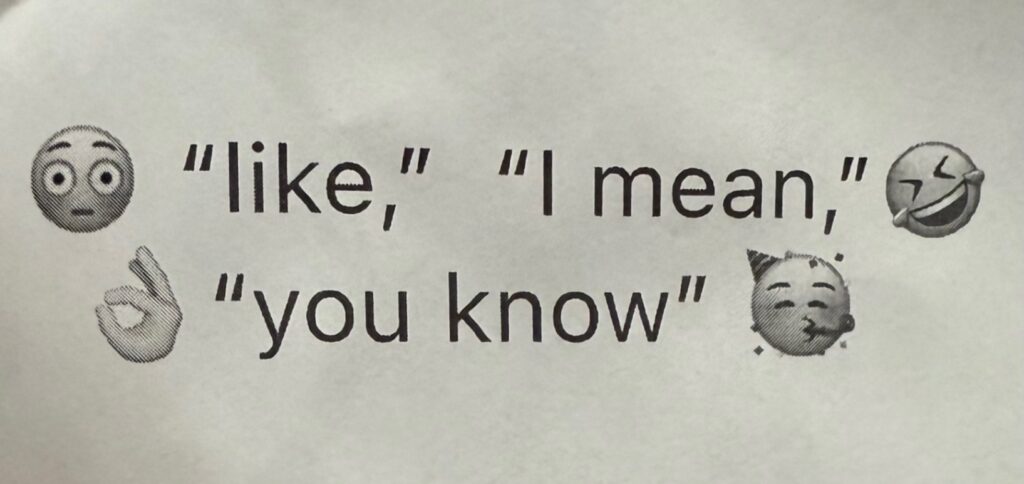
We often meet Gen Zers having difficulty in expressing themselves. They repeat phrases like “you know,” “like,” or “I mean,” take long pauses and search for the right words. Rich vocabulary enables better metaphors, similes, storytelling, poetry and prose.
-
Who is responsible?
We cannot blame an entire generation simply because they were born at a particular time, and parents are not the culprits either. This is the outcome of industrialisation, education designed mainly to produce workers, obsession with money, the advent of technology, fast-paced living, diminishing reading habits, the decline of pen and paper, nuclear families, reduced interaction with grandparents, loss of cultural rituals and bedtime stories, and an over-reliance on English that cost us fluency in provincial languages and even in English itself. This combination led us here.
Can They Express Themselves With Language?
They do express themselves, but in a different way. They speak less, rely on guessing, and prefer short sentences, emojis and short forms. It is rare to find a Gen Zer who is elaborative with language while speaking. However, they are very creative and imaginative in other areas, even if they do not fully express this creativity through language.
Why Do They Use Abbreviations?
Fast lifestyle, metro culture, digital texting, lack of attention to spelling or syntax, and an urgent need to save time are big reasons. Writing full sentences is less important to them because the priority set by society is earning money, not preserving culture. Language is culture, but society rewards the one with a higher paycheque, not the one who knows his mother tongue or writes poetry. We set these priorities, and now we blame them.
As a society, we have stooped so low that when a Gen Zer speaks his mother tongue fluently, we suspect something is wrong with his education.
Are They Developing The Language?
They do. Language evolves and will continue to evolve. Some tribal languages use only a few words or combine sounds instead of detailed vocabulary. Perhaps this is the new normal. But the decline in vocabulary and expressive ability is clearly visible.
-
Is this good or bad?
Every change appears negative in the beginning. We cannot dismiss a whole generation simply because their vocabulary is diminished. Nowadays we are witnessing a downfall from the perspective of language and culture. Vocabulary matters and it should grow, not shrink. We should be open to adding new words and make our language rich.
Is Mother Tongue Still Their Priority?
Certainly not. Society values wealth, status, purchasing power, and material advancement. Education today focuses on creating workers. Culture and language are not part of the priority list. But once they were a priority for our middle class, the very group responsible for most of our literature, poetry and cultural preservation.
-
Who is responsible?
Society and the education system failed to teach the importance of expression. Gen Zers, informally known as Zoomers cannot be blamed for prioritising what society rewards. We need language knowledge to preserve culture and even for legal remedies.
-
The unexpected benefit of this downfall
We can observe that many young people are tired of the internet, corporate pressure, social media and fast lives. They are returning to their roots, becoming multilingual, improving their mother tongue, reading books, writing on paper, and understanding that if they want to be big achievers their roots should be deep.
How Work Culture Shapes Their Language
Most Gen Zers or “digital natives” individuals are unemployed or working in corporations and MNCs, with high-tech gadgets, digital collaboration, and repetitive tasks. Their communication must be fast and precise, so abbreviations, emojis, and short forms dominate. This environment produces very few new words. Language grows in streets, not in corporate cabins.
Effects Of Information Overload
We live in data. Modern marketing depends on data, but data must be understandable and in proper language form. Without clear language, information becomes useless. When the mind receives too much information in fragments, it stops processing deeply. Reading becomes scanning, listening becomes skipping and understanding becomes guessing. This overload makes people impatient and reduces their ability to engage with long sentences, thoughtful conversations or meaningful writing.
Information overload also weakens memory. When everything is available instantly, the mind stops storing anything. Why remember a word when you can search it? Why read a book when a summary is already available? Why listen carefully when you can replay the message later. The result is a generation that consumes huge amounts of content but absorbs very little.
Communication Methods And Their Effects
There is a tendency of writing full sentences when we write with pen and paper. Modern Communication involving use of gadgets results in increased use of emojis, short forms, and abbreviations. Over time, we start forgetting spelling which ultimately weakens sentence-making. This is what is happening now. We should encourage writing on paper. Writing is an art, it is polished when practised.
They Should Continue Doing What They Do
Whatever Gen Zers are doing is natural for their circumstances. They should excel, but also adopt some enriching habits like reading and writing. They should also learn to slow down and observe their own thoughts. Constant speed creates shallow thinking and shallow expression. When they pause, reflect and engage with language with books with meaningful conversations they will discover a depth that fast communication cannot offer. These practices will not hold them back but will gradually strengthen their clarity, sharpen their creativity and enrich them. The goal here is not to abandon the present lifestyle but to balance it to keep the language alive.
Any Advice Or Correction
First of all, Gen Zers should learn their mother tongue. To increase their vocabulary they can talk to elders on different topics, learn as many proverbs as they can. Start using them in conversations. Avoid using emojis for expression, start making full sentences, and write something on paper daily.
Moreover, not only syntax, they should know the script of their mother tongue and use it intensively, understand the nuances of sounds, their usage and representation. Avoid using roman letters for their mother tongue. Although the script is not language, it is very important.
If they are reading literature written in their mother tongue or regional language, read in that script only, do not read the translated version. A person can express clearly and creatively only when their foundation in language, culture, and thought is strong.
-
Nature always fixes imbalance
We evolve, and nature has a way of restoring what is lost over time. The space created by prioritising currency over culture, language, and meaningful expression will be gradually filled. Some young people are rediscovering their roots, more will rediscover, embrace their traditions, and deepen their connection with language and culture.
-
Accept change and be positive
Fear of what the next generation will do is not new; it has been a part of human nature for generations. They constantly believe that they are superior to the younger generation. In my view, the Gen Zers are smarter, logical and tech savvy than the previous generations. Change is natural and it is going to lead us to new understanding about language and expression, and creativity.
Having said this, it is noticeable that we are not evolving the way our previous generation has evolved. This is posing us a new experience which could be challenging. We need to exercise prudence and see it as an opportunity to guide the next generation wisely and allow them to shape their own path.